
by: BONO BUDI PRIAMBODO
The comprehensive blueprint: The new deal with Beijing
The historical arc from Sukarno’s fierce, unyielding fight for resource independence (Berdikari) to Suharto’s integration into the Western economic sphere—culminating in the signing away of Papua’s immense mineral and gold wealth to Freeport in 1967 before the sovereign status of the territory was even fully finalized—demonstrates that the nature of Indonesian leadership dictates the terms of its survival.
The contemporary reality is stark: Indonesia’s current leaders are treating global trade as a closed-loop transaction to enrich dynastic political empires. If Indonesia is to survive the looming geopolitical storms of the twenty-first century, it must abandon the illusion of passive non-alignment and strike a New Deal with Beijing.
This New Deal is not a plea for paternalistic care, nor is it an invitation to economic vassalage. It is a hard-nosed, realpolitik alliance based on a profound understanding of Chinese strategic necessity.
The Realpolitik exchange
From the perspective of Beijing’s Tianxia (All Under Heaven) strategic framework, a chaotic, corrupt, and weak Indonesia on its southern periphery is an unacceptable liability. A weak Indonesia means the critical straits can be easily destabilized by domestic unrest or quietly co-opted by a shifting Western coalition to enforce an economic blockade on China. Beijing does not need a sycophantic client state that can be easily bought off by the highest bidder cycle-to-cycle; it needs an unbreakable, predictable firewall.
Indonesia must present itself to Beijing as that strong, focused, and disciplined ally, explicitly modeling its state behavior on the strategic clarity of Vietnam. Under its “Four Noes” defense policy, Vietnam guarantees that its territory will never be used as a launchpad for Western containment against China, ensuring high-level trade stability. Yet, because Hanoi possesses an unyielding domestic discipline and a potent military, Beijing is forced to respect them as an equal, sovereign neighbor.
The mechanics of this New Deal demand that a new generation of focused Indonesian leaders say to Beijing: “We will completely guarantee your economic corridors, secure your supply chains with our minerals, and act as the permanent firewall protecting your southern flank. In return, the terms of trade change completely.”
The capital generated from this alliance must no longer disappear into offshore accounts held by corrupt elites. It must be aggressively captured by the Indonesian state and funneled back into the core foundations of national power:
- The Internal Capital Reallocation: Every dollar derived from Chinese joint ventures in nickel, copper, and maritime trade must be systematically taxed and channeled into state-backed public education, comprehensive healthcare, and a domestic technological base.
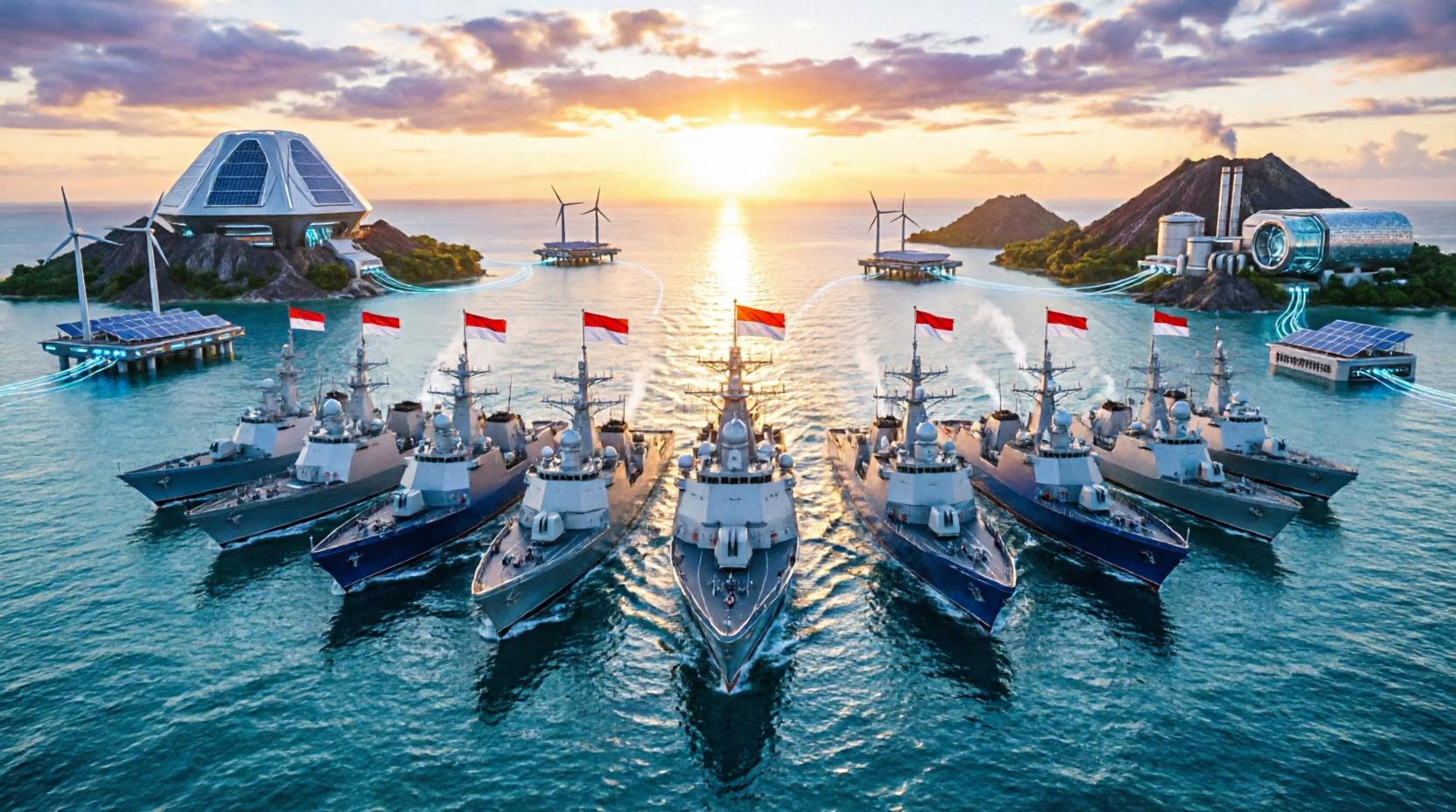
- The Defense Transformation: The Indonesian military must permanently discard its land-locked, inward-looking counter-insurgency focus. The Navy and Air Force must be completely rearmed and modernized using global trade revenues to establish absolute command of the internal seas and the outer archipelagic rim, removing any pretext for foreign intervention.
- The Enforcement of Downstreaming: Raw resource extraction must be entirely banned. Foreign capital must build high-value processing and manufacturing plants on Indonesian soil, managed by a new class of bilingual, Bahasa-Mandarin speaking Indonesian technocrats.
Conclusion: The call for the strategic sovereign
The tragic adage remains true: Indonesia has only ever had two eras of definitive leadership—the anti-imperialist, revolutionary vision of Sukarno, and the highly calculated, technocratic man-management of Suharto. The rest have merely replaced them, managing a bureaucratic vacuum while the country’s riches are extracted by foreign interests and local oligarchs.
Vision Indonesia offers the only realistic path forward out of this stagnation. It acknowledges that true sovereignty cannot be preserved by hiding from global superpowers or by adopting a naive stance of “one million friends.” It can only be forged by leaders who possess the domestic spine to look at the rising regional hegemon not as a master, and not as an enemy, but as an equal, dangerous partner at the global chess table.
By perfecting national cohesion, eradicating the cultural cringe of the Western-mimicking elite, mastering the linguistic codes of international statecraft, and ruthlessly diverting the wealth of the oceans into the welfare of the people, Indonesia can finally shake off its post-colonial torpor. It is time to close the gates to internal predators, lock down the archipelagic corridors, and reclaim the ancient, unyielding thalassocratic destiny of the Southern Seas.